Sexual Health Awareness Month

Knowing Your Body Is Part of Taking Care of It
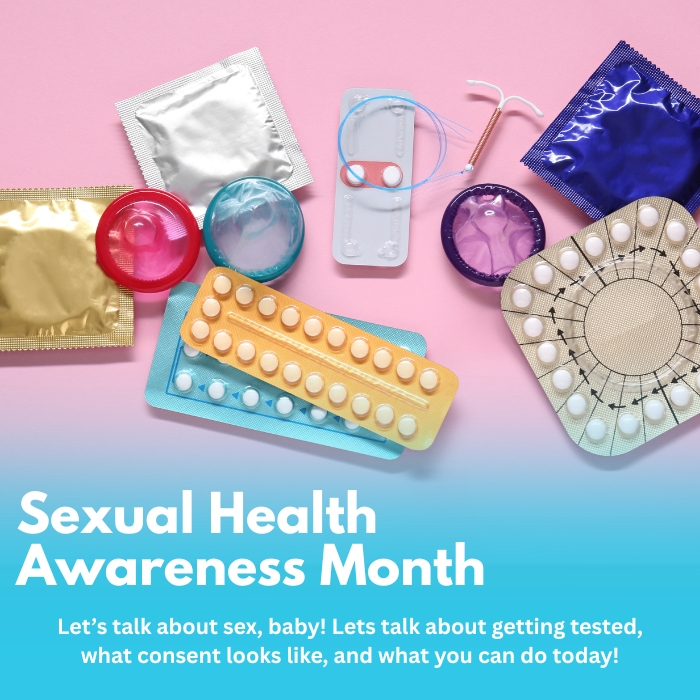
September is Sexual Health Awareness Month, and while “sexual health” might immediately make you think of STI testing, condoms, or birth control, it’s much bigger than that. Sexual health is about education. It’s about reproductive health, consent, communication, pleasure, boundaries, knowing your body, understanding risk, and having access to healthcare without being embarrassed or judged for needing it.
Testing Is Just Part of My Routine
Working in the adult industry has made me very intentional about my sexual health. When I have different partners, I get tested before and after those encounters when appropriate. I pay attention to testing windows, new developments in sexual health, different types of tests, and what those tests can and cannot actually tell me. And honestly, one of the biggest things I do for my sexual health is simply keep learning! Science changes. Recommendations change. There are always new medications, vaccines, testing options, prevention methods, and research to consider. I'm lucky to have an "Erik", he loved to research and learn too. But even after years of being sexually active, I still learn things about my own body that nobody ever taught me. I actually learned something about my menstural cycle like this week haha. Sex education should not end with one awkward class in school. Your body deserves ongoing education.
I also think testing becomes much less intimidating when you stop treating it like some dramatic event that only happens when something has “gone wrong”. Getting tested does not mean you are dirty. It does not mean someone cheated. It does not mean you have been irresponsible. Sometimes it simply means: I am sexually active, and I want information about my body. That should be incredibly normal, not AWKWARD or carry stigma.
The Tinder Series Taught Me Something Interesting
I ran into this issue in a very real way while filming my Tinder series, that made it difficult to coordinate. If you have asked me why it takes so long getting this type of content done, you've probably heard me reply with this as one of the main reasons: Unlike working exclusively with other adult performers, I was filming with civilians, meaning people who were not part of the adult industry and were not familiar to the testing culture that many professional performers are familiar with. And something genuinely surprised me... some people were apprehensive about getting tested. Some had absolutely no idea how to even go about getting tested, that was kind of shocking to me. We were talking about potentially having sex, but somehow getting a simple sexual health screening beforehand felt more serious or intimidating than the sex itself. And I think that says a lot about the stigma we still have surrounding sexual health. Testing can feel like an accusation.
There are lots of STIs that can exist without obvious symptoms. Knowing someone personally also does not magically tell you what is happening biologically inside their body.
That is what testing is for. We both want to have safe fun, so testing should be an easy "YES!"... I would love to see us reach a point where saying, “Hey, when was your last STI screening?” feels as normal as asking someone about birth control or condom use.
It is not insulting. It is communication.
Access Is Part of Sexual Health Too
Another part of Sexual Health Awareness Month that deserves attention is access to care.
It is easy to tell people, “Just get tested,” without talking about whether they can actually access testing. Luckily, here in Canada it is free, but in my area, our local and main sexual health center is under pressure and underfunded.
Sexual health clinics, reproductive health organizations, like Planned Parenthood locations, and smaller local clinics are essential for treatment and prevention, and are incredibly important to our communities, and important services, like testing, contraception, prevention, reproductive healthcare, education, referrals, and confidential conversations with healthcare professionals. When those services disappear or become harder to access, people do not suddenly stop having sex, and risk goes UP, outbreaks go UP!
Understanding your own anatomy, pleasure, menstrual cycle, fertility, hormones, medications, pain, or changes in your body is sexual health. And being able to have those conversations without shame makes all of us safer.
.
Consent Is Sexual Health
Testing and reproductive healthcare are only part of the conversation. Consent is sexual health. Being able to say yes, no, or change your mind. Informed consent means agreeing to sexual activity with a clear understanding of what you’re agreeing to. That includes honest communication about boundaries, protection, contraception, STI status and testing, and anything else that could affect someone’s health or decision. Consent isn’t truly informed if important information is intentionally withheld. Everyone deserves the chance to make choices about their own body based on accurate, relevant information. As a partner you have to communicate. The more secretive we make sex, the harder it becomes for people to ask questions when something actually matters.
Three Things You Can Do Today
You do not need to completely overhaul your life for Sexual Health Awareness Month.
Start with three things.
1. Learn one thing about your body.
Look up something you were never properly taught. Learn about STI testing windows. Find out what sexual health screenings are recommended for someone in your age group or circumstances. Replace embarrassment with curiosity.
2. Check in with your healthcare provider.
When was your last sexual health screening? Are you due for cervical screening, STI testing, contraception renewal, vaccination, or another reproductive health appointment?
If you have been putting something off, make the call or book the appointment.
3. Have one honest conversation.
Talk to a partner about testing, boundaries, condoms, contraception. Talk about something that hurts, something you want or don't want. Or simply ask a question you have been too embarrassed to ask.
Your Sexual Health Belongs to You
One of the most empowering things I have learned through my career is that taking sexual health seriously does not make sex less fun, spontaneous, or sexy. For me, it does the opposite. Information allows me to make decisions confidently. Testing gives me information. Communication gives me boundaries. Education gives me autonomy. And continuing to learn about my body makes me better equipped to advocate for myself when something changes.


Comments